
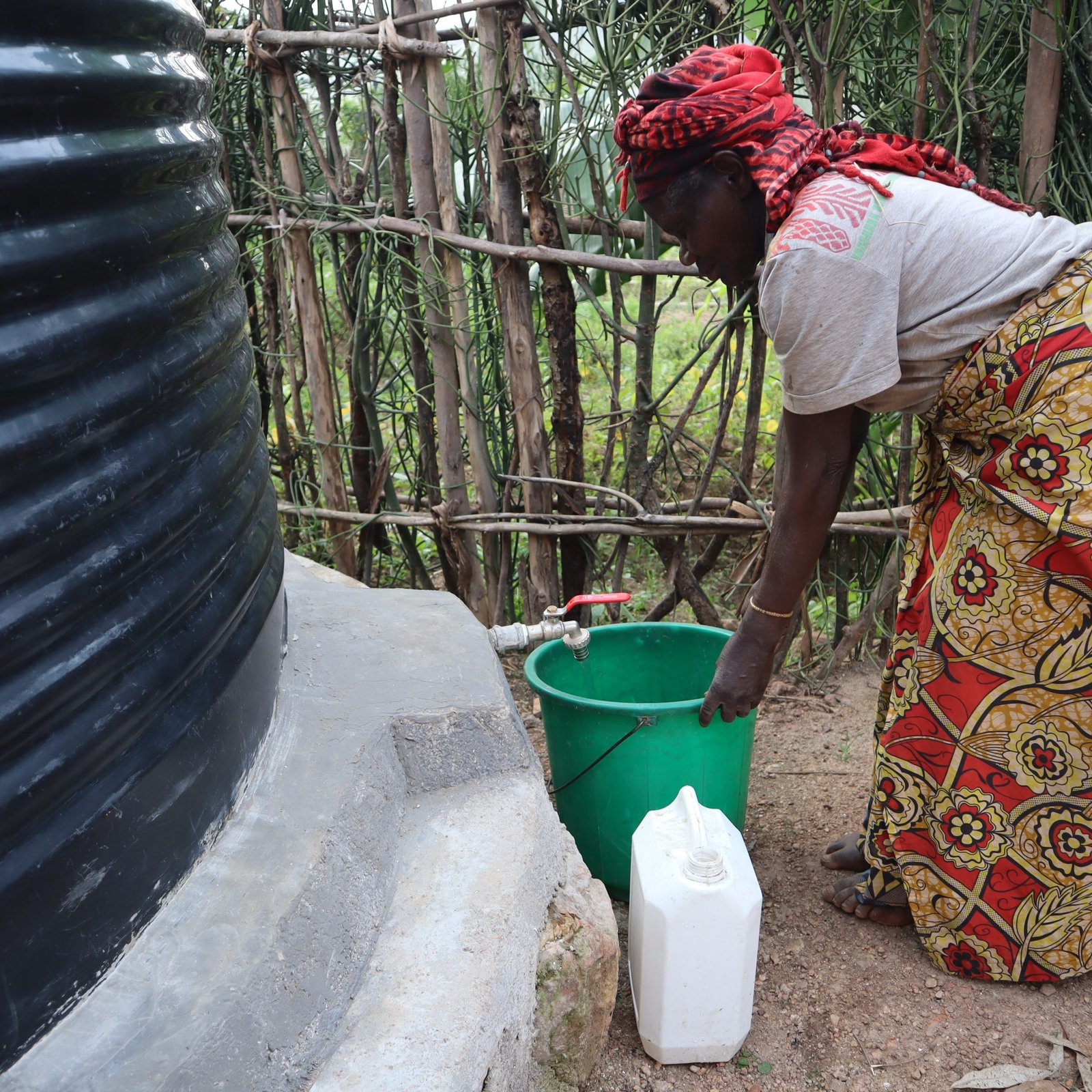
Tanks, about the size of 26 bathtubs each, strapped onto large trucks, made their way down the hilly, rocky roads of Rwanda. In November 2025, just a few months ago, these trucks were headed to homes in a remote area in the southern part of the country. In total, 16 5,000-liter water tanks were given to households in Mubuga Cell, Nyanza District.
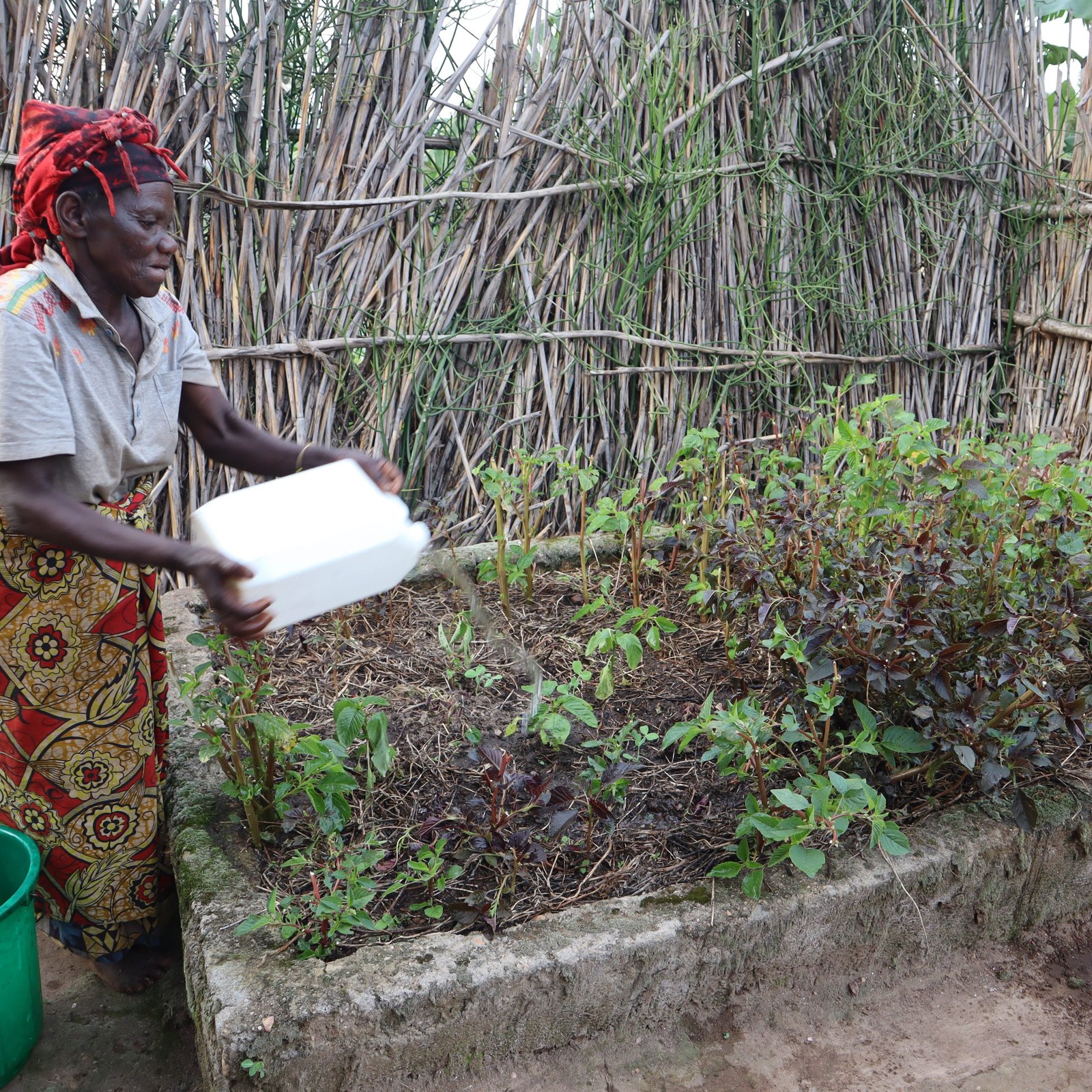
Tanks provide a multitude of services, including water for irrigation of kitchen gardens, household cleaning, and hygiene. Aloyisia Nyankima, after using her tank for a couple of months, told us that, “We now boil the water to make it safe for drinking, we use it for washing, cleaning, and for all our daily needs.” Now that villagers have easy access to water right at their doorstep, they can save a significant amount of time and energy to focus on their families, education, and income-generating activities.
Before the tanks’ arrival, villagers had to walk hours to collect water in heavy jerrycans. Maria Mukarusine, a 63-year-old recipient of a water tank, said that, “This water saved me from difficult conditions, because I was not able to carry a jerrycan and go fetch water from the river, which was two hours away.” Women and girls are often those who travel these long distances to collect water for their families. Therefore, girls disproportionately miss valuable school and study time compared to their male counterparts, reducing their likelihood of even completing primary school. Access to water tanks in backyards eliminates this roadblock and returns hours of crucial education to girls.

But how do these tanks collect water? It’s actually simple; A pipe connects the tank to the participants’ home’s gutters. So, whenever rain arrives, all the water that hits the roof flows into the gutter, then the pipe, and finally into the tank. Utilizing rain harvesting techniques like this is especially crucial as climate change worsens and dry spells become more common and rainfall becomes more erratic. Mukarusine continued, saying, “We will be able to use it to water vegetables at any time, since vegetables used to dry up due to a lack of water.” After days without rainfall, tanks often still contain water that families can use.
The receiving households of these tanks participate in the Dufatanye Organization’s Village of Hope project, where communities receive crops, livestock, and equipment to help smallholder farms generate needed income. We don’t stop with simply materials; we also provide capacity-building training in agriculture and financial savings to ensure continued impact long after Dufatanye leaves.
These tanks are in high demand across Rwanda, for good reason, but they are often more expensive than most families can afford. One tank is 360,000 Rwandan Francs, or almost $250 USD. This price excludes the additional costs of transportation, pipes, concrete foundation, and labor to install the tank. With high demand and Dufatanye’s limited funding capacity, not everyone can receive tanks and benefit from this project like some in Mubuga. Our goal at Dufatanye is to expand on this project and continue bringing water to those in need.