Located in the remote southern village of Rasaniro, Mukagatare Claudine is a mother of two boys and one girl. Oftentimes, while raising her children, Claudine could not afford an essential, protein-rich staple of the Rwandan diet: Beans. At market, a kilo of beans costs 1400 Rwandan Francs (~0.96 USD), but without a stable income, Claudine and her family missed out on this crucial protein source and went hungry.
Trying to solve this problem, Claudine attempted to build her own kitchen garden to supplement their diets and gain easier access to more balanced meals. She said, “We tried to make kitchen gardens ourselves. We built them using wood and small mounds or other weak materials. And sometimes we would come back and find children had destroyed them.” Mwanguzi Evariste, another resident of Rasaniro, ran into similar problems with weak kitchen gardens that would fall apart in mere weeks. In addition, water would simply run off and not absorb into the soil due to the faulty design of the gardens.
Despite their efforts, Claudine and Evariste were still struggling to make ends meet and provide for their families, but everything changed when the Village of Hope project came to Rasaniro in 2025.
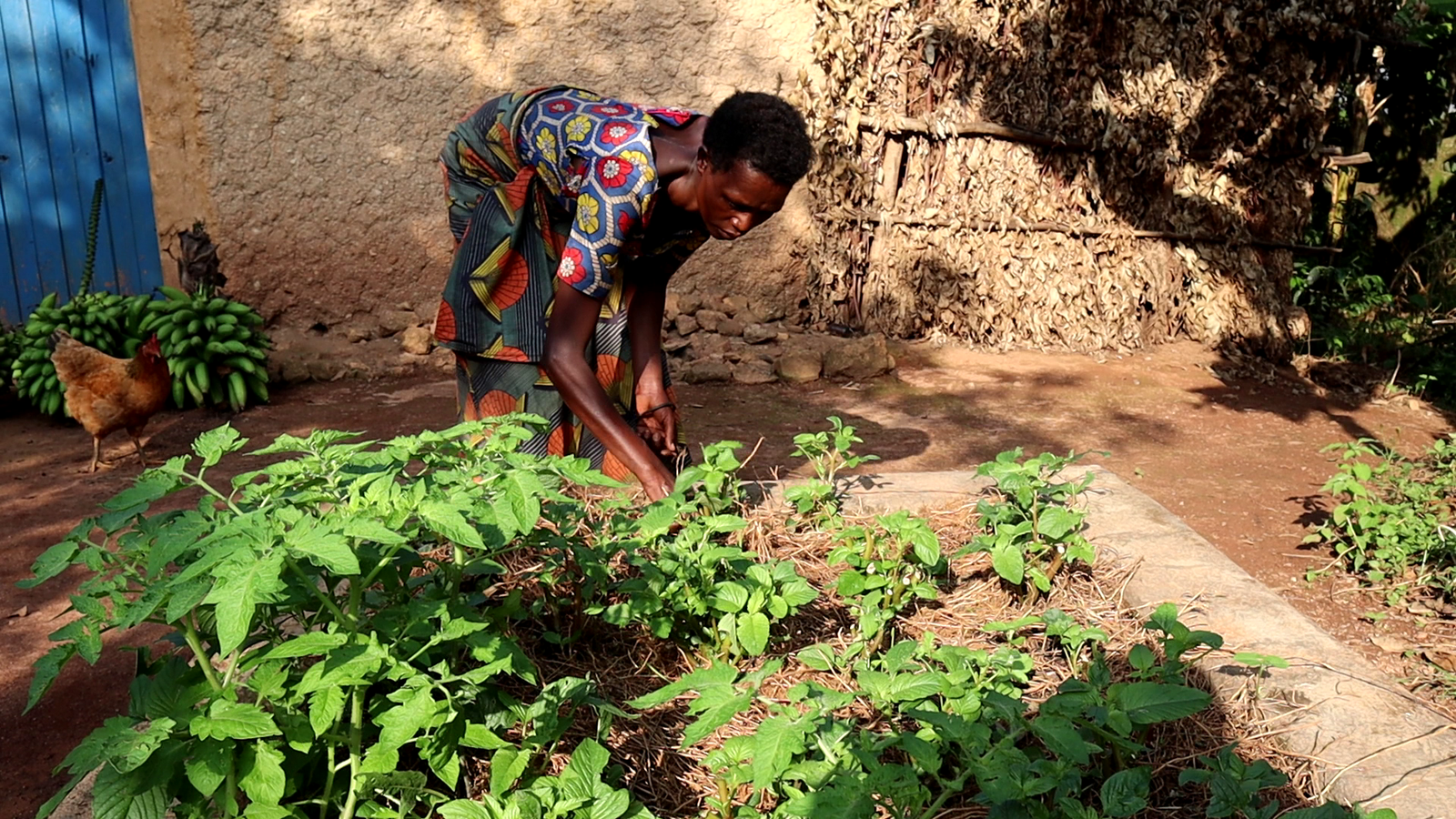
Through the Village of Hope, facilitated by the Dufatanye Organization, kitchen gardens, made from bricks and cement, were constructed for every participating family in Rasaniro, including Claudine’s household. After the garden’s construction, Claudine’s circumstances changed tremendously; she could now reliably grow her own vegetables. Expressing her gratitude, Claudine said, “This garden is strong… I no longer wander around looking for vegetables, even now this evening I harvested them.” Instead of worrying where her family’s next meal will come from, Claudine can now focus on income-generating activities that increase her livelihood and provide an education for her children.
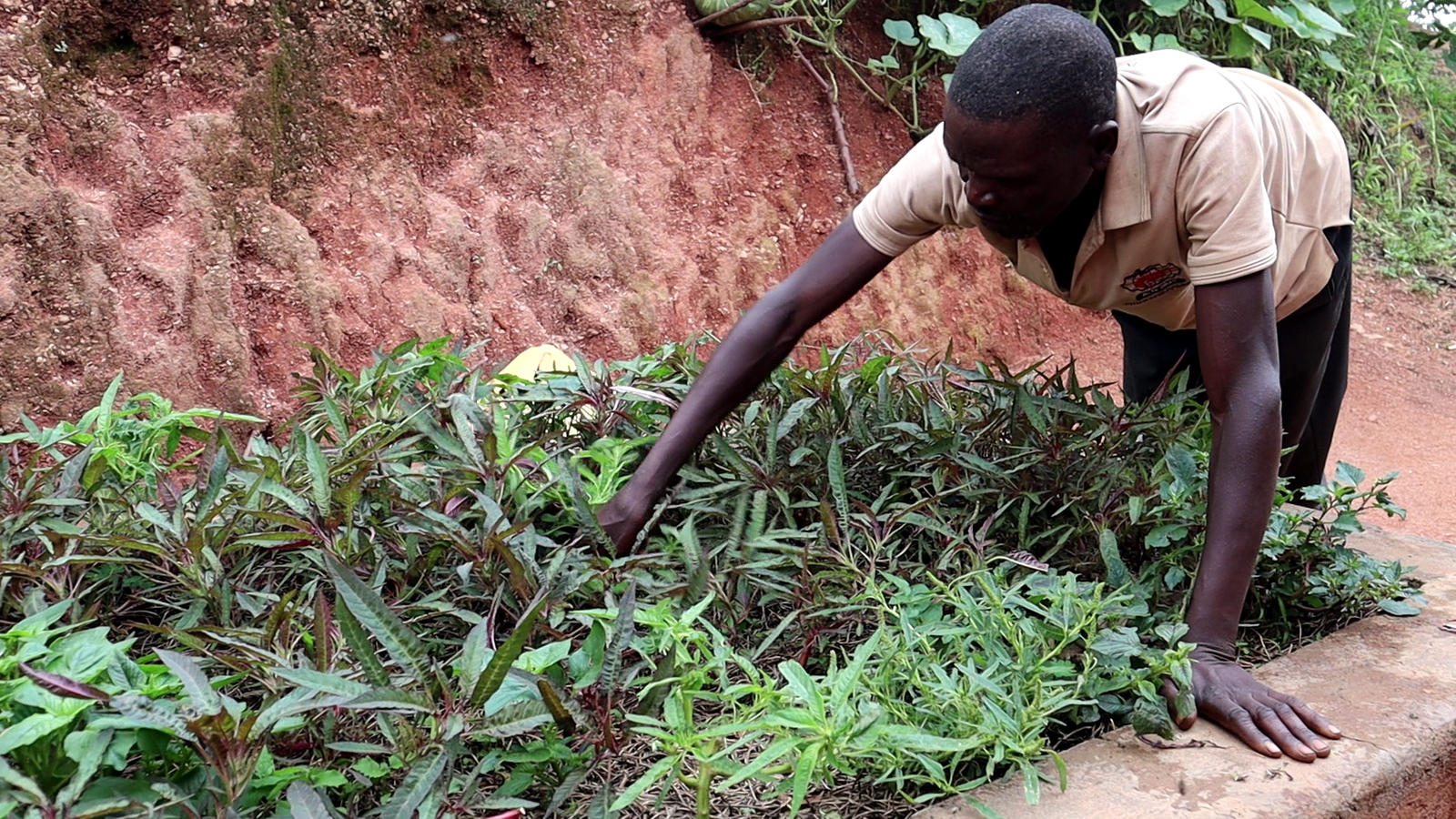
Evariste explained how his gardens were significantly improved, saying that “With the improved technique and garden structure, the water now stays in place… so whenever we water, the soil retains moisture.” Knowledge transfer and collaboration between Dufatanye and the villagers of Rasaniro led to simple fixes that produced substantial, long-term results. The growth of new vegetables led to improved health outcomes. “Now, in our village, almost all of us eat vegetables. That means nutrition has improved and stunting has been reduced,” Evariste explained. A cascade of outcomes has not only improved participants’ nutrition but also their health and overall quality of life.
Another benefit of the Village of Hope is the distribution of fruit trees along with training on proper maintenance and care. Once the avocados and mangoes are harvested, Claudine says they will help “increase the money I make to buy notebooks and pens for my child.” Her oldest child finished secondary school, and her next goal is to save enough to pay for her university fees. Only one year into the Village of Hope project, Claudine is determined to build off this momentum and continue creating more opportunities for her family.